Documenting FORTRAN
LegacyMap transforms legacy FORTRAN systems into fully documented, navigable applications by extracting subroutine hierarchies and control flows. Designed for OpenVMS-based environments, our solution helps teams preserve institutional knowledge and prepare confidently for modernization or audits.
-
OpenVMSFORTRAN
-
LEGACYMAPPRE-PROCESSOR
-
doxygen
-
Call Graphs
-
Code Index
Structured Documentation for FORTRAN Legacy Systems
LegacyMap brings long-standing FORTRAN applications into focus with automated callgraph generation, control-flow mapping, and intelligent documentation. From engineering and scientific systems to critical infrastructure platforms, FORTRAN remains deeply embedded across industries – and understanding it shouldn’t require a team of archaeologists.
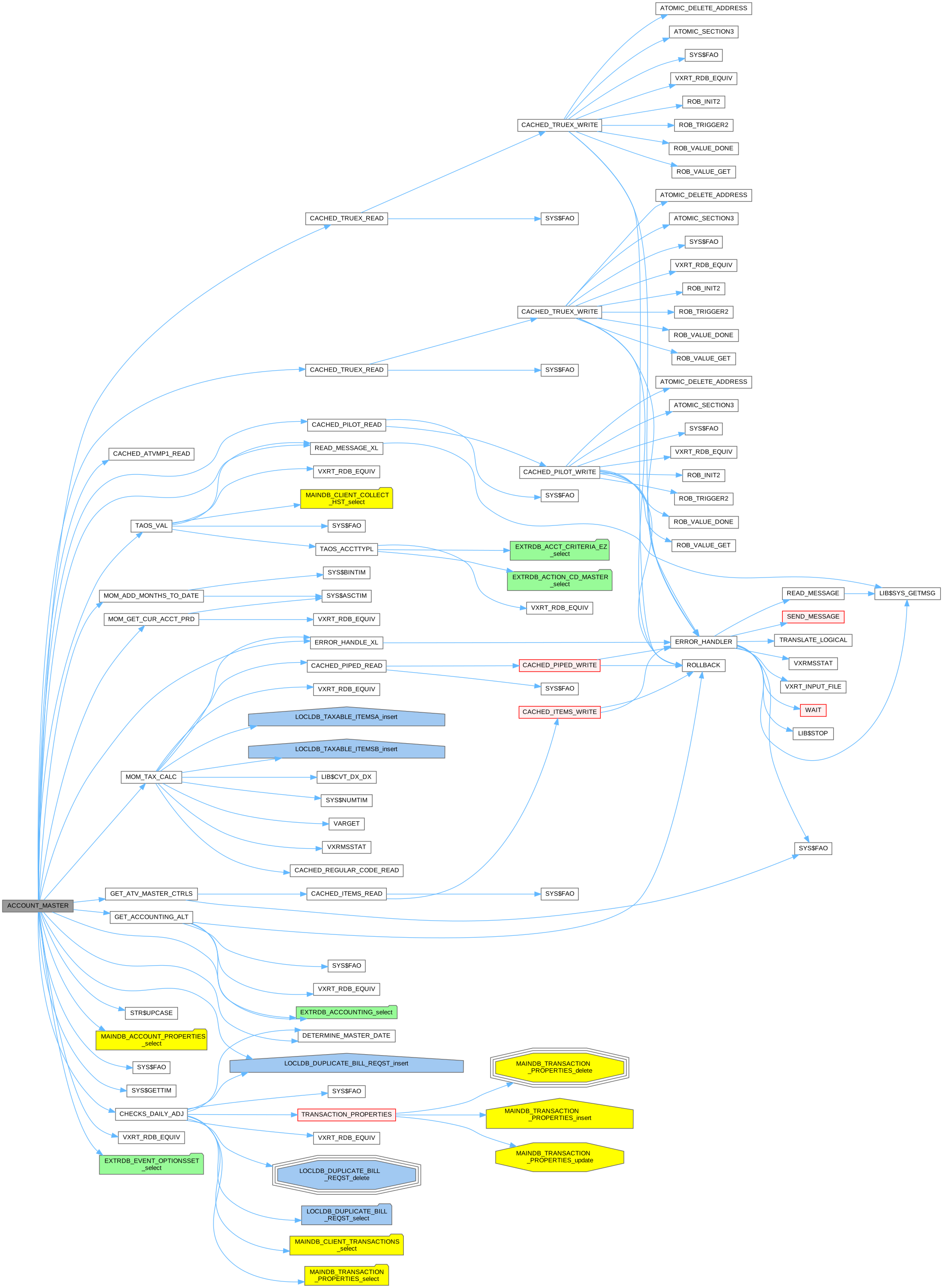
LegacyMap analyzes your FORTRAN codebase to uncover structure, logic, and dependencies, transforming opaque source files into clean, interactive documentation. We identify subroutine relationships, file and I/O operations, shared data structures, and module interactions – then export everything into developer-friendly formats like HTML, PDF, and LaTeX.
Key Features of Our FORTRAN Tooling
• Subroutine & Module Mapping – Automatically build callgraphs from FORTRAN 77, 90, and 95 source code, revealing execution flows and modular structure.
• I/O Access Detection – Identify READ and WRITE operations, file dependencies, and shared data access across your application.
• COMMON Block Analysis – Track shared memory and global state across modules to pinpoint dependencies and tight coupling.
• Doxygen-Compatible Output – Export fully cross-referenced documentation for use in searchable web portals or printed formats.
Why Teams Use LegacyMap for FORTRAN
• Accelerate Developer Ramp-Up – Help new engineers understand legacy systems faster through visual diagrams and linked source context.
• Simplify Maintenance and Debugging – Get a clear picture of how subroutines interact, where data moves, and what logic is reused.
• Enable Confident Refactoring – Identify redundant code, unused modules, and risky dependencies before making changes.
• Modernize with Clarity – Use documentation as a launchpad for replatforming or re-architecting your system with full visibility.
LegacyMap helps you make sense of the past so you can plan for the future. Reveal the structure, logic, and lifeblood of your FORTRAN systems – with zero code changes and maximum insight.
Frequently Asked Questions
Curious about how Sector7 can facilitate your application migration? Explore our FAQs for expert insights.
LegacyMap produces cross-referenced technical documentation in HTML, PDF, and LaTeX formats, compatible with Doxygen workflows. Outputs include callgraphs, file access mappings, procedure trees, and SQL access flowcharts. This documentation is fully searchable and ideal for developer onboarding, system audits, and modernization projects.
Legacy COBOL systems often lack up-to-date documentation, making them difficult to maintain or migrate. LegacyMap solves this by automating the generation of accurate, detailed documentation that reflects the current state of your system. This reduces operational risk, improves code maintainability, and accelerates digital transformation initiatives involving legacy technologies like COBOL, FORTRAN, BASIC, and embedded SQL.
VX/FPT can analyze, re-engineer, and migrate legacy Fortran programs. The approach includes
- Identifying and correcting systematic errors in the code.
- Generating documentation reports.
- Re-engineering code for migration, optimization, and standardization.
- Instrumenting code for regression testing and coverage analysis.
Yes, LegacyScan has multiple phases. Phase 1 is to scan the OpenVMS 3GL or SQL and map the non portable elements against the Sector7 language remediation tools. Sector7 have language remediation tools for all the major OpenVMS languages (C, BASIC, COBOL, FORTRAN, PASCAL, SQL, SQLMOD). If any extensions are detected that are not handled by the Sector7 language remediation tools a JIRA is created for that specific issue and the tool set enhanced.
LegacyScan is Sector7's analysis tool that provides detailed assessment of your legacy systems. It identifies the elements of your OpenVMS application that are not directly portable to Linux, and delivers a full breakdown of application compatibility, recommended remediations, and actionable development tasks. Learn more about our assessment process.
Sector7 offers a free code assessment to evaluate your migration requirements and provide initial project insights. This assessment helps identify potential challenges and opportunities before your migration begins. Get in touch to schedule your free assessment.